


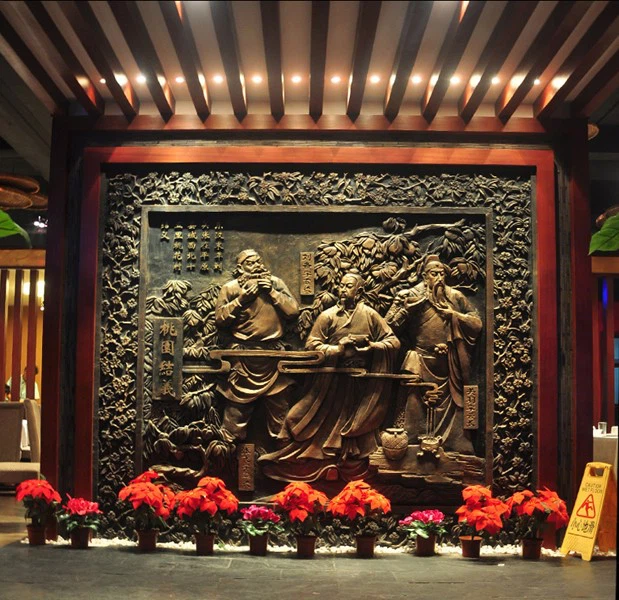
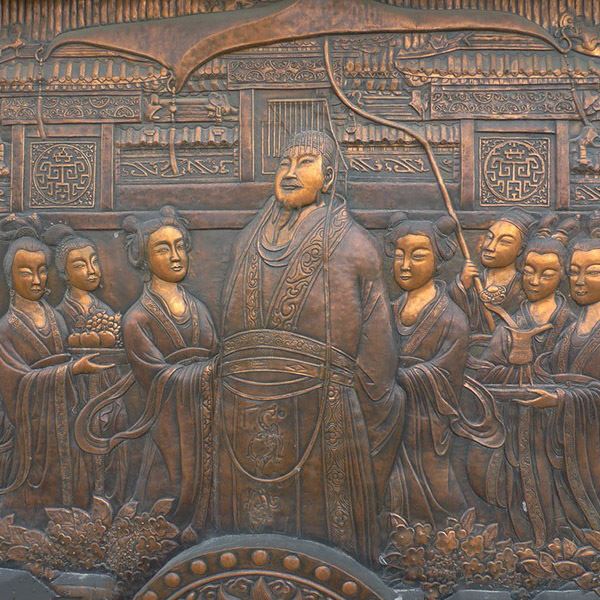
As a supplier of Chinese-style Copper Relief, I am delighted to share with you the fascinating world of the tools used in its production. Chinese-style Copper Relief is a unique art form that combines traditional Chinese aesthetics with the durability and beauty of copper. It is widely used in various settings, such as museums, galleries, public spaces, and private collections, adding a touch of elegance and cultural heritage.
Design and Sketching Tools
The production of Chinese-style Copper Relief begins with the design phase. Designers use a variety of tools to create intricate and detailed sketches that capture the essence of traditional Chinese art, such as ink brushes, pencils, and paper. These hand-drawn sketches serve as the blueprint for the final relief, allowing designers to experiment with different compositions, motifs, and styles. In addition to traditional drawing tools, modern digital design software, such as Adobe Photoshop and CorelDRAW, is also widely used to enhance the design process. These software programs offer a range of features and functions, such as image manipulation, color correction, and vector drawing, enabling designers to create more precise and detailed designs.
Modeling Tools
Once the design is finalized, the next step is to create a three-dimensional model of the relief. This is typically done using a combination of traditional and modern modeling tools. For small-scale or detailed models, sculptors may use clay, wax, or plaster to create a rough form that can be refined and detailed by hand. Tools such as sculpting knives, wire tools, and modeling boards are essential for shaping and texturing the model. In recent years, 3D printing technology has also emerged as a valuable tool in the production of Chinese-style Copper Relief. 3D printers can create highly accurate and detailed models based on digital designs, reducing the time and effort required for manual modeling. Sculptors can use 3D printing to create prototypes, test different design concepts, and produce complex geometries that would be difficult or impossible to achieve using traditional methods.
Casting Tools
After the model is completed, the next step is to create a mold and cast the relief in copper. The casting process is a critical stage in the production of Chinese-style Copper Relief, as it determines the final quality and appearance of the piece. There are several casting methods used in the production of copper relief, including sand casting, investment casting, and lost-wax casting. Sand casting is a traditional method that involves creating a mold by packing sand around a pattern. The sand mold is then heated to remove any moisture, and molten copper is poured into the mold to create the relief. This method is relatively simple and cost-effective, but it may not be suitable for creating highly detailed or complex reliefs. Investment casting, also known as precision casting, is a more advanced method that uses a wax pattern to create the mold. The wax pattern is coated with a ceramic shell, which is then heated to melt the wax and harden the shell. Molten copper is then poured into the ceramic shell to create the relief. This method allows for greater precision and detail, but it is more time-consuming and expensive than sand casting. Lost-wax casting, also known as the cire-perdue process, is a traditional method that has been used for centuries in the production of bronze sculptures and reliefs. This method involves creating a wax model of the relief, which is then coated with a layer of clay or plaster to create a mold. The wax is then melted out of the mold, leaving a cavity in the shape of the relief. Molten copper is then poured into the cavity to create the relief. Lost-wax casting is a highly skilled and labor-intensive process, but it allows for the creation of extremely detailed and intricate reliefs.
Finishing Tools
Once the relief is cast, the next step is to finish and refine the surface of the piece. This involves a variety of tools and techniques, including sanding, polishing, patination, and gilding. Sanding is used to smooth the surface of the relief and remove any rough edges or imperfections. Different grades of sandpaper are used to achieve different levels of smoothness, depending on the desired finish. Polishing is used to give the relief a high-gloss or satin finish. This is typically done using a polishing wheel or a buffing machine, along with various polishing compounds. Patination is the process of applying a chemical solution to the surface of the relief to create a desired color or finish. This can be used to simulate the effects of aging or to create a specific decorative effect. Gilding is the process of applying a thin layer of gold or other precious metal to the surface of the relief. This can be done using a variety of techniques, including leaf gilding, electroplating, and gold paint. Gilding is often used to add a touch of luxury and elegance to the relief.
Quality Control Tools
As a supplier of Chinese-style Copper Relief, we understand the importance of quality control in the production process. We use a variety of tools and techniques to ensure that each piece of relief meets our high standards of quality and craftsmanship. Visual inspection is one of the most important quality control tools used in the production of Chinese-style Copper Relief. Our experienced artisans carefully examine each piece of relief to check for any defects, such as cracks, holes, or uneven surfaces. They also check the details and proportions of the relief to ensure that it matches the original design. Measurement tools, such as calipers and gauges, are also used to check the dimensions of the relief and ensure that it meets the specified tolerances. This helps to ensure that the relief fits properly and looks consistent with other pieces in the same collection. Non-destructive testing methods, such as ultrasonic testing and X-ray inspection, are used to detect any internal defects or flaws in the relief. These methods allow us to identify any potential problems early in the production process and take corrective action before the relief is finished.
In conclusion, the production of Chinese-style Copper Relief involves a wide range of tools and techniques, from traditional hand tools to modern digital technology. Each tool and technique plays an important role in the creative process, helping to bring the designer's vision to life and create a beautiful and unique work of art. As a supplier of Chinese-style Copper Relief, we are committed to using the latest tools and techniques to ensure the highest quality and craftsmanship in our products. If you are interested in purchasing Chinese-style Copper Relief for your museum, gallery, public space, or private collection, please visit our website at Chinese-style Copper Relief to view our collection and learn more about our products. You can also contact us to discuss your specific requirements and obtain a quote for your project. We look forward to working with you to create a stunning and unique Chinese-style Copper Relief that will enhance the beauty and cultural heritage of your space.
References
- "The Art of Chinese Copper Relief." Chinese Art Quarterly.
- "Copper Casting Techniques in Traditional Chinese Sculpture." Journal of Asian Art History.
- "Modern Tools and Technology in the Production of Copper Relief." International Journal of Metal Art.
