



Manufacturing Steps

STEP1
First making a 3D modelling effcet pitcures for client to confirm
STEP2
Using digital sculpting making a baby sculpture(reduce in scale);passing above two steps, client can see which their want.
STEP3
Next step We're going to make a large size model what client ordered,with 1:1 scale, stainless steel plate to do its epidermis,the metal steel pipe is the internal support frame.(Throughout the production process, we will continue to advance and provide photos to the end)
STEP4
Shipping (Try our best to do the smallest area and strongest to pack products,in order to save shipping fee for clients.
Manner of packing:blanket + pearl wool + bubble film + steel shelf(for FCL= Full Container Load) /wooden box (for LCL =less than container load)
STEP 5
How to install it---(We will provide detailed installation instructions)
The development of relief art !
Relief art, as an ancient art form, has a long history of development and has run through many important stages of human civilization. From the earliest primitive society to modern and contemporary times, relief art not only records humanity's pursuit of beauty, but also reflects the social, religious and technological progress in different cultural backgrounds.
As early as the Paleolithic Age, humans had already begun to draw simple patterns on cave walls. These early "paintings" can be regarded as the sprouts of relief art. For instance, the murals discovered in the Lasco Caves in France and the Altamira Caves in Spain demonstrate the observations and worship of nature by humans at that time. Although these images are mainly flat, through the changes of lines and shadows, they initially show a sense of three-dimensionality, laying the foundation for the later development of relief art.
Entering the ancient civilization period, the relief art of ancient Egypt reached a highly developed level. The ancient Egyptians were skilled at using stone to create relief works, which were mostly applied in temples and tombs and had a strong religious significance. For instance, the reliefs in the Abu Simbel Temple display the achievements of Pharaoh Ramses II. The figures are clear and the movements are regular, exuding a sense of solemety and order. The characteristic of ancient Egyptian reliefs lies in their strict frontal rule composition, that is, the representation of the figure's head on the side and the body on the front. This style reflects the ancient Egyptians' pursuit of eternity and stability.
Ancient Greek relief art was renowned for its focus on the perfect proportions and dynamic representation of the human body. Greek artists, through in-depth research on the structure of the human body, have created a series of vivid works. The reliefs on the Parthenon are one of the representative works of this period. They depict the birth of the goddess Athena and scenes such as the Pan-Athenian festival parades. These reliefs feature elegant lines and vivid postures of the figures, fully demonstrating the ancient Greeks' pursuit of ideal beauty. In addition, ancient Greek reliefs often depicted mythological stories and sports competition scenes, such as the images of athletes in the Olympic Games, further highlighting the vitality and diversity of ancient Greek culture.
During the ancient Roman period, the artistic tradition of ancient Greece was inherited and developed, and reliefs were widely used in architectural decoration and monuments. The relief style of the Romans was more realistic and grand, emphasizing detailed depiction and spatial layering. For instance, the spiral reliefs on the "Trajan Column of Merit" detail the process of the Roman army's conquest of Dacia, and each layer is filled with rich narrative content. This kind of relief is not only an artistic expression but also a historical record tool, showcasing the might and splendor of the ancient Roman Empire.
Relief art in medieval Europe was deeply influenced by Christianity, and church architecture became the main carrier of reliefs. The reliefs of this period were mostly religious themes, such as "The Last Judgment" or "The Passion of Jesus", etc., which have a strong religious and mysterious color. Reliefs in Gothic architecture stand out particularly. They are usually located on both sides of the main gate or beneath the vault, creating a sacred and solemn atmosphere through complex carving techniques. For example, the entrance of Notre-Dame de Paris is decorated with many exquisite reliefs. These works are not only decorative but also can guide believers to understand the stories of the Bible.
During the Renaissance, relief art revalued the traditions of ancient Greece and Rome while integrating the spirit of humanism. Artists began to pay attention to the individual's emotional expression and the details of real life, making the relief works more vibrant and infectious. Although Michelangelo's "Lamentation of Christ" is a round sculpture, its delicate texture and profound emotional expression are also applicable to the inspiration for relief creation. During this period, the relief techniques were greatly enhanced, and artists were able to create astonishing visual experiences through light and shadow effects and perspective techniques.
During the Baroque and Rococo periods, the relief style became more magnificent, dynamic and decorative. Baroque reliefs emphasize drama and tension, often attracting the audience's attention through exaggerated movements and strong contrasts. For instance, Bernini's works are renowned for their highly dynamic shapes and exquisite craftsmanship. The reliefs of the Rococo period, on the other hand, placed greater emphasis on elegance and lightness, often using gentle curves and exquisite details to create a romantic atmosphere.
In modern and contemporary times, relief art has shown an unprecedented trend of diversity and innovation in form, materials and expression techniques. Artists are no longer confined to traditional stone or metal materials, but are attempting to use glass, plastic and even digital technology to create relief works. For instance, Henry Moore's abstract reliefs blend geometric shapes with organic forms, exploring the relationship between space and volume. Furthermore, the development of globalization has enabled relief art to absorb cultural elements from all over the world, forming a diversified artistic style. Some contemporary artists also combine relief sculptures with installation art to create works that are highly interactive and rich in ideological depth.
In conclusion, the history of relief art is a history of continuous evolution and innovation. From the initial simple graphics to today's diversified expressions, relief art has always been an important carrier of human culture and emotions, witnessing the progress and development of human civilization.
CONTACT US
Thank you so much for taking the time to read through all the information above. We would be delighted if you could reach out to us for any further details. Together, let's explore the possibilities of building a mutually beneficial partnership. Warmest regards.
Product Parameters
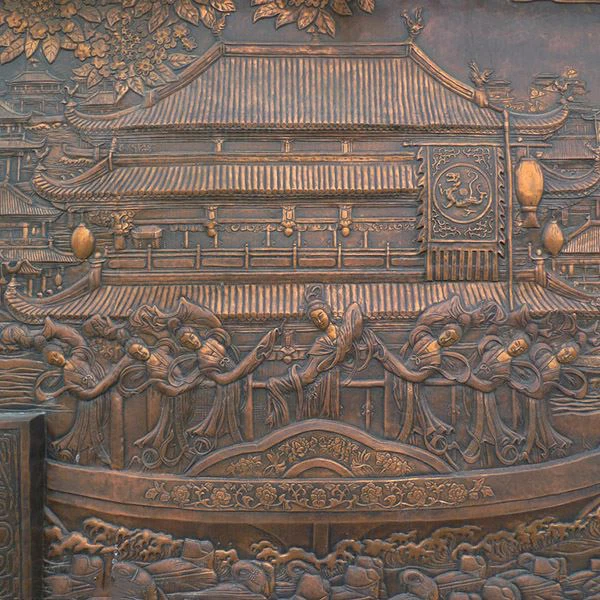
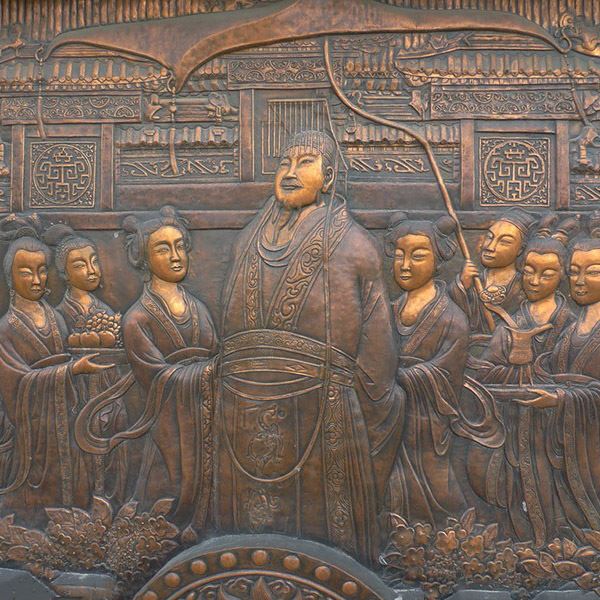
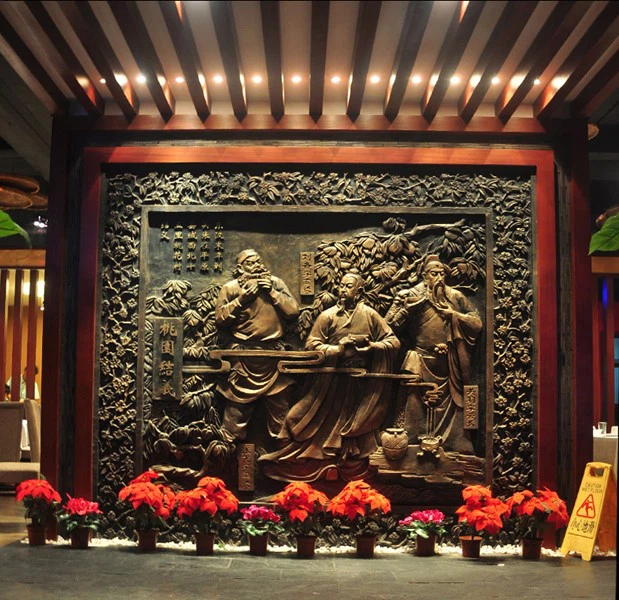
NAME and THEME :Museum-quality copper wall relief
MATERIAL ANALYSIS:bronze/copper
SURFACE TREATMENYT:mirror polish /color painted or other can been custom-made
MOQ:1pc order
PROCUCT PURPOSE: decoration sculptures can been placed anywhere--pool /park/public place/Residential estate
Hot Tags: museum-quality copper wall relief, China museum-quality copper wall relief manufacturers, suppliers, factory, cast bronze sculpture, Chinese style Copper Relief, Copper Relief Customization With School Culture, Copper Relief Manufacturer, copper wall relief, Museum quality Copper Wall Relief


